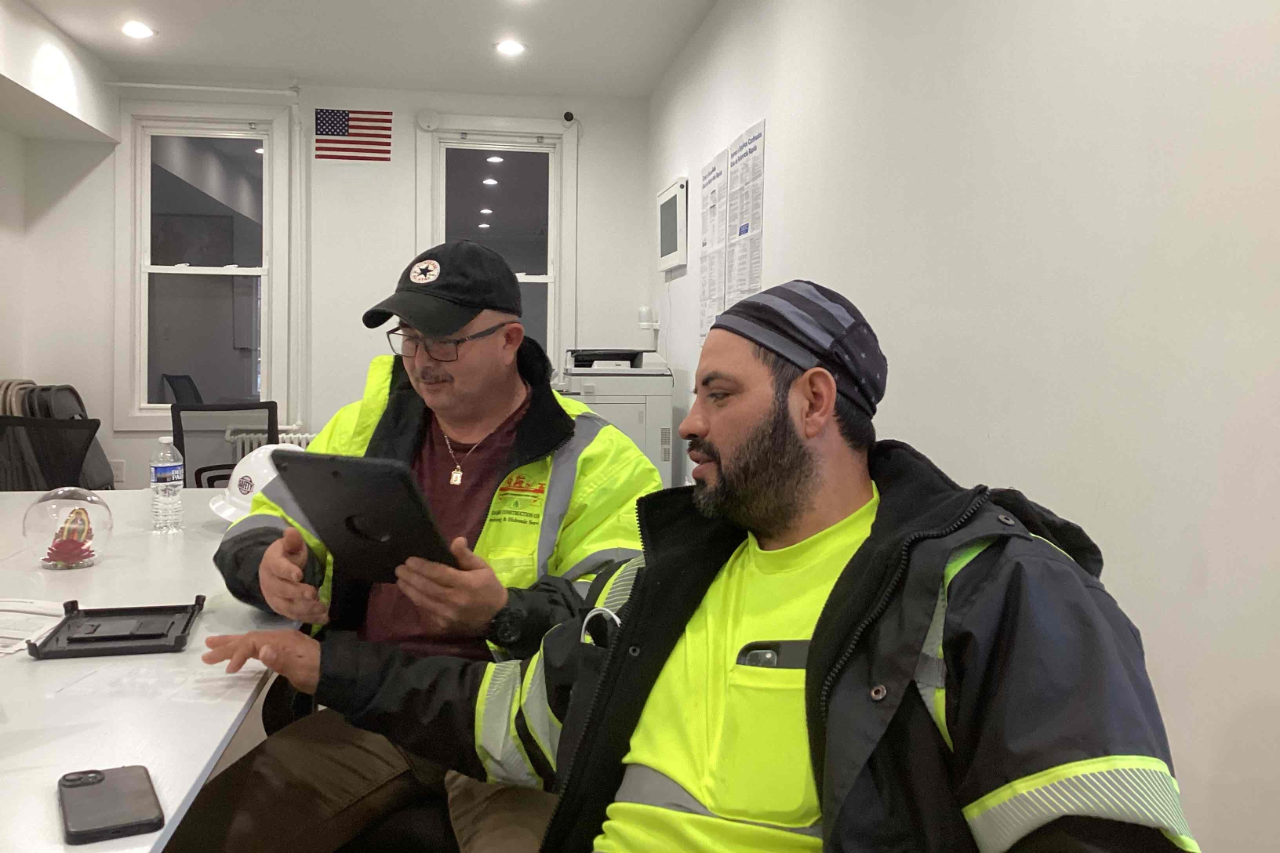
Major thanks to Phil Constantino, Project Executive at Fort Myer Construction Company in DC and CloudRig Advisor, for contributing to this guide.
Contractors have an ERP problem.
The question we get most frequently from execs—always curious about how their competitors are operating—is, “What should I do about my ERP? Are there better options out there?”
We’ve never had a great answer.
At first, because we didn’t know enough about the most commonly used systems (Vista, Spectrum, Foundation, Sage 300, QuickBooks). Now, having learned them over years of working with construction companies across the U.S., it’s because we can’t strongly recommend a switch.
Switching ERPs is more painful and costly than contractors anticipate. Construction ERPs touch every part of the business—payroll, job costing, accounting, HR, and more. Whatever you’re switching to will be tough to implement. Studies show that implementation services alone can cost 2–2.5x your original software budget and disrupt your business for 12–18 months.
Contractors in markets like Texas, Florida, and Virginia—who are on the hunt for new construction ERP systems—are often in for a world of surprise and hurt.
The pain is real
Of course, answering “Don’t” to the question “Which ERP should I switch to?” doesn’t really solve the problem. The question is common because the pain is real, as anyone who’s spent five minutes in one of these ancient accounting systems knows.
ERPs promised construction companies an all-in-one solution to manage payroll, job costing, HR, field reporting, equipment tracking, business intelligence, and more—all from one system. The idea was to eliminate data silos so contractors could deliver projects efficiently and profitably.
But in practice, most of these tools are so complex and outdated that users stick to the bare minimum—basic bookkeeping—and ignore everything else.
The ERP Trap: Trying to Be Everything to Everyone
ERP vendors have set themselves an impossible task.
- Innovation requires focus. Companies trying to do it all can’t make any one feature great.
- Legacy systems consume resources. Maintaining 20-year-old codebases leaves little room for real progress.
- Accounting DNA is hard to shake. To an accounting vendor, a “field system” means one that makes it easier to open a PO or bill for T&M—not one that helps foremen hit production targets or superintendents set three-week lookaheads.
Good accounting is critical. But when software reduces everything to an accounting problem, it can’t deliver on other essential functions—especially field management and production performance.
ERPs don’t help:
- Superintendents identify targets or get the resources they need.
- PMs monitor earn/burn or project accurately.
- Controllers finish WIP efficiently (a key accounting workflow!) because data from the field is missing.
So, What’s a Contractor to Do?
Switch out the ERP and accept 18 months of disruption and hundreds of thousands in costs? Bring on consultants billing indefinitely by the hour? Live with a system that doesn’t really work?
Not necessarily.
Contractors can start by recognizing that they don’t actually have “ERP problems.” They have:
- PM problems: “It takes me 3 hours to figure out what this job is going to cost based on what we’ve done in the field.”
- Superintendent problems: “Foremen don’t understand how production rates impact the job.”
- COO problems: “I don’t know where I’m making money, losing money, and why.”
- Controller problems: “WIP takes 4 days because I’m chasing PMs to tell me what’s happening in the field.”
And they have one blunt, outdated tool they’re trying to solve all of them with—the ERP.
What Other Industries Already Figured Out
Most other industries—manufacturing, energy, utilities, defense, and pharma—solved this decades ago with a hub-and-spoke approach.
The ERP serves as the source of truth for financial data, while users plug in specialized tools built to solve their specific workflows.
For example:
- Floor managers use enterprise asset management tools like IBM Maximo.
- Product managers use lifecycle tools like Siemens.
- Warehouse teams use supply chain tools like Blue Yonder.
- HR departments use human capital management tools like Workday.
Everything ties back to the ERP, so there’s one source of truth—but each team gets tools that actually help them work better.
A manufacturer running exclusively on SAP can’t innovate or operate as efficiently as one using this hub-and-spoke model.
The Modern Path for Contractors
Contractors can benefit from the same approach.
Instead of rolling out the fifth ERP “field extension” in 10 years—another attempt to make foremen speak accounting’s language—contractors should adopt modern field tools that:
- Are built for the field, not the office.
- Translate foremen’s inputs into the language of accounting automatically.
- Connect out of the box to any ERP.
The pushback is always, “We don’t want another point solution.”
But in our experience, the real concern is double data entry and mismatched numbers—i.e., tools that don’t integrate. That’s fair. Integration with legacy ERPs has traditionally been difficult and expensive.
Modern tech, however, has changed that. Contractors can—and should—demand painless, out-of-the-box ERP integration as a baseline requirement.
As for pricing concerns? Look at an ERP pricing sheet—separate line items for payroll, invoice review, HR, equipment, field extensions, and more. Contractors aren’t saving by buying everything from one vendor.
What’s Next
Part Two of this article (coming next week) walks through how contractors can assemble the right construction tech stack to maximize efficiency and ROI.
Here’s a sneak peek of the two key lessons we’ve learned after years of working with leaders in heavy civil, sitework, and utilities construction across the U.S.:
- Your stack should evolve as your business grows.
- Your business is unique. Choose and assemble tools that fit your workflow, not a one-size-fits-all monolith.